
Reviewed · MAUI SURF LESSONS
Semi-Private Surf Lesson – 3 Students 1 Instructor
Maui surf lessons feel weirdly doable. In Lahaina, Maui Waveriders keeps things small-group so you practice the basics, then hit the Breakwall for real waves.
I especially like the start on land: ocean safety plus surf technique drills before you ever paddle out. I also like the patient, encouraging vibe, with instructors like Kahala and Fred called out for keeping first-timers confident.
One thing to consider: the water and conditions can be energetic, so you’ll want that moderate physical fitness level and a swim shirt for sun and board rub.
Key things that make this lesson worth your time
- Small-group coaching with 3 students to 1 instructor, capped at six total
- Land practice first, including ocean safety and surf technique drills
- Breakwall (Lahaina) session, so you learn to read waves before standing up
- Suitable for beginners and intermediate surfers, not just one level
- Gear support and comfort tips, with many guests noting provided surf attire (and you still should bring a swim shirt)
Why Lahaina and the Breakwall is a smart surf classroom
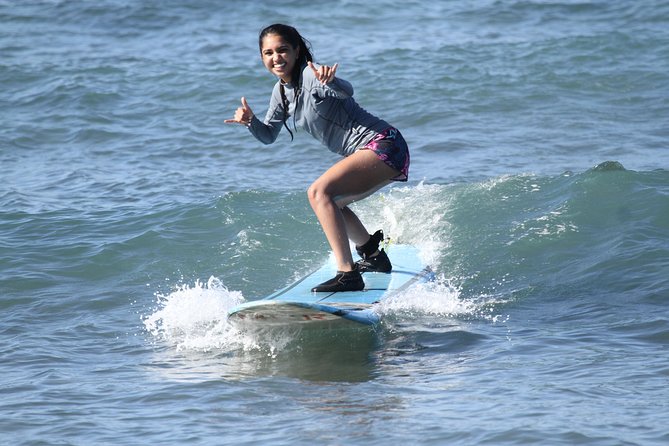
Lahaina is a classic West Maui base for ocean play, and this lesson is built around getting you wave time fast. The plan is simple: you paddle out to the Breakwall in Lahaina to get a feel for the waves, then you work on standing up and riding. That matters because surfing is part technique, part timing, and you cannot learn timing from dry land.
The good news is that the lesson is designed for both beginners and intermediate surfers. So if you’re brand new, you’re not being tossed into the deep end, figuratively or literally. If you already know the basics, you still get structure, coaching, and a chance to refine pop-up and wave handling.
I also like the practical tone of the teaching. This is not just about hype or vibes. It’s about a safe, repeatable process: learn safety, practice skills, then catch waves in a controlled way.
More Maui tours, island days, and ocean experiences


The 90 minutes: what the lesson time actually looks like
The session runs about 1 hour 30 minutes. That’s a sweet spot for vacation days because you get meaningful practice without eating your whole morning or afternoon.
Here’s how the flow typically feels, in plain English:
First, you start with instruction on shore. You’ll get ocean safety guidance and surf techniques, plus hands-on practice. This is where your instructor sets expectations and teaches you what to do once you’re in the water.
Next, you move into the ocean and gear up on the boards. Your group paddles out to the Breakwall in Lahaina. The goal here is to feel the waves, get your bearings, and understand how the set comes through.
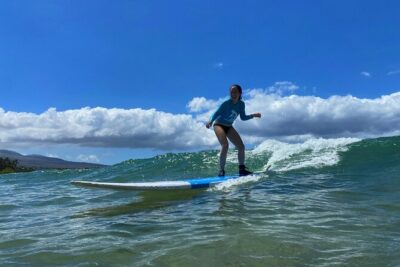
Then comes the action: you work on catching waves and standing up on your surfboard. By the end of the lesson, many people are reporting real success, including families with teens and kids able to stand during the session.
Because it’s a semi-private setup, you’re not waiting in line for coaching. The instructor can watch individuals and adjust what you’re doing while the group cycles through learning.
Land practice first, then pop up on real waves
Surf lessons often fail for one of two reasons. Either you skip the fundamentals, or you do too many drills and not enough riding. This lesson does the basics first, which is exactly what you want.
On land, you learn key surf techniques and ocean safety. The safety part matters a lot in Maui surf. Even if you feel confident in the water, waves have their own rules: timing, currents, and the way sets roll in. Getting those rules explained before you go out helps you stay calm once you’re on the board.
Then you transition to the ocean practice. You paddle out to the Breakwall to feel what the waves are doing. That step is not filler. It helps you understand when to paddle, what the water feels like under you, and how to react when a wave starts shaping up.
Finally, you catch waves and practice your pop-up and balance. The stand-up moment is the whole game. Several guests highlight how their group made steady progress, even when it was someone’s first time surfing.
Semi-private group size, and why up to six changes everything
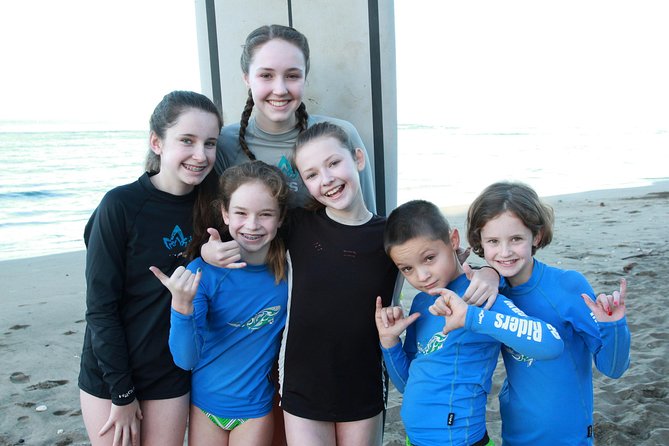
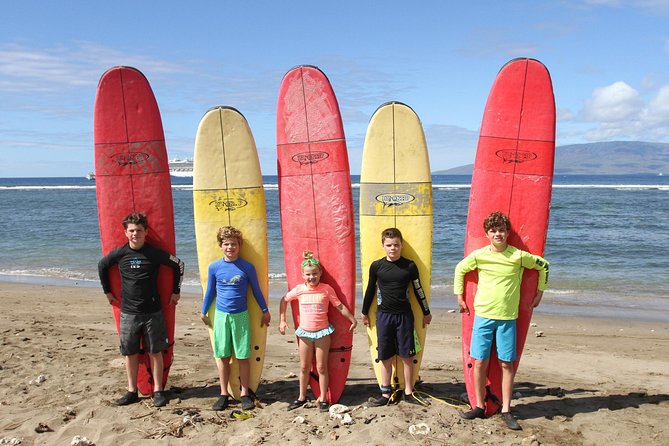
You’re not stuck in a huge class where your instructor can barely see you. The lesson is built for small groups, with 3 students to 1 instructor and a cap of six total.
That’s the difference between learning and just getting “experience.” In small groups, you get:
- More individual watching from your instructor
- More chances to practice the same skill
- Faster corrections (you fix one thing, then try again)
It also makes the lesson easier for families. Several guests mention bringing teens and kids who were able to progress during the session. When the instructor can manage the group closely, everyone gets enough attention to actually move forward.
There’s one practical trade-off: because the surfing area can get busy, you might be sharing the general location with other instructors. That doesn’t automatically ruin anything, but it can make the spot feel crowded. In a small-group lesson, you’re still getting personalized coaching even if the broader beach scene is active.
What to bring, what they may provide, and how to stay comfortable
This is where you can make your day smoother with a little prep.
The lesson guidance says to bring a swim shirt for sun protection and to reduce rubbing against the surfboard. I strongly agree with this. The board gets warm, the sun is real, and friction is a thing in saltwater training.
What about other gear? The information you have says the lesson includes surf coaching and gear use, and some guests report that surf attire like shirts and shoes were provided. Since that’s not stated in every detail you get up front, I’d treat it as a potential bonus, not something you should count on blindly.
Pack these basics:
- Swim shirt (even if you think you might be provided one)
- Comfortable swimwear underneath
- A sense of patience while you figure out balance and timing
Also, plan to start at the meeting point near Waikapu, and then you’ll head to the surf location. After the lesson, the activity ends back where you started.






Instructors, photos, and the encouragement you actually need
A great instructor can turn scary into doable. The lesson’s reputation leans hard on coaching style: clear instructions, steady patience, and a focus on keeping you safe while you learn to ride.
Names that show up in guest feedback include Kahala, Fred, Jake, Tiare, Trin, Waio, and Waiola. The consistent theme is that instructors balance firmness with encouragement. One guest even notes an instructor being focused on safety when currents felt rough, which is exactly the right mindset for a surf lesson.
If you want a memory that doesn’t depend on your own camera skills, there’s also a photographer option. Multiple guests mention that photos are available during the session for a reasonable price, and several say the results were better than what they captured themselves. That’s common for action sports because a pro can catch the exact moment you’re upright.
If you’re going with kids or teens, photos can be the difference between remembering a lesson as effort and remembering it as proof that you actually did it.
Price check: is $109 a good value for Maui surf?
At $109 per person for about 1 hour 30 minutes, this is positioned as a value-forward surf lesson. The key question is: what do you get for that money, beyond just renting a board?
You’re paying for:
- Structured ocean safety and technique instruction
- A small-group setup that increases attention
- Time on the water where you practice standing up and catching waves
- A coaching approach suited to beginners and intermediate surfers
Small groups cost more to run, because you need an instructor focused on fewer people. That’s why the “up to six” cap matters. In a bigger class, you might spend more time waiting or less time correcting. Here, you’re more likely to leave with real progress.
Also, the lesson has strong overall satisfaction metrics, with a 4.7 rating and 92% recommending it. That doesn’t guarantee your experience, but it does suggest a consistent teaching approach.
If you’re doing Maui on a tight budget, this lesson is a smart use of funds. You get enough instruction to make your first surfing attempts safer and more effective, and you get wave time rather than just watching from shore.
Who should book this lesson, and who might want a different option
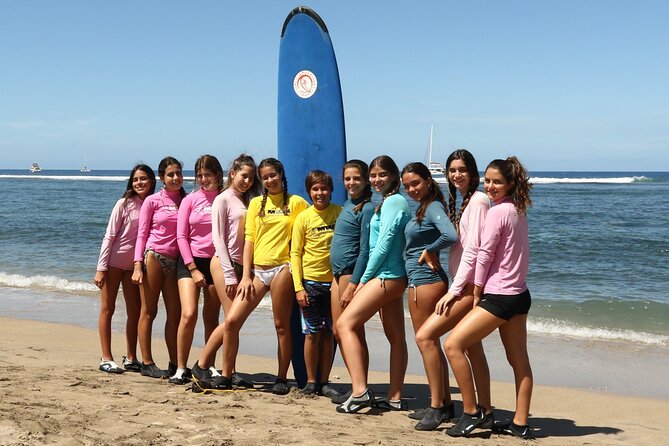
This surf lesson is a strong fit if:
- You’re a beginner who wants safety plus step-by-step technique
- You’re an intermediate surfer who wants structured coaching on a specific spot
- You’re traveling with a family and want small-group attention
- You prefer a calmer pace to learning rather than a big group free-for-all
You should be comfortable with moderate physical fitness, because surfing requires paddling, balance, and getting up after wipeouts. Even if you’re not “in shape,” the coaching style is designed to help you progress, but you still need basic stamina.
If you hate water-related activities or you’re not comfortable in open ocean conditions, you might look for a different kind of experience. Surf lessons are active by nature, and you’re out there to work, not just to pose.
Booking timing and where you’ll start
This lesson is typically booked about 28 days in advance on average. That’s not a crisis, but it is a sign that good surf time slots fill up, especially in peak season.
You’ll meet at QCW7+M5X, Waikapu, HI 96793, USA, and the activity ends back at the meeting point. It’s also described as near public transportation, which is handy if you don’t want to fight for parking.
Many guests note that the operation feels easy to manage logistically, including convenient parking.
Final call: should you book this surf lesson?
I’d book it if you want your Maui surf day to feel coached, safe, and likely to produce results. The combination of land-based safety instruction, small-group teaching (up to six), and a Breakwall session gives you the right ingredients for first-time success.
Book this lesson if you’re:
- New to surfing and want a structured start
- Planning a family activity where every person needs attention
- Short on time and want a focused 1.5-hour session
Skip it or consider a different style of lesson if:
- You want a totally hands-off experience
- You’re not comfortable with moderate physical effort in the ocean
- You prefer a very private, no-compromise custom setup (this one is small, but still group-based)
If you’re choosing one surf lesson to avoid wasting vacation time, this is the kind that usually pays off quickly.
FAQ
How long is the Semi-Private Surf Lesson in Lahaina?
The lesson lasts about 1 hour 30 minutes.
How many people are in the group?
The lesson is semi-private, with 3 students and 1 instructor, and group size is limited (up to six total).
Is this surf lesson good for beginners?
Yes. It’s suitable for beginners and intermediate surfers.
Where does the lesson start?
The lesson starts at QCW7+M5X, Waikapu, HI 96793, USA, and returns to the same meeting point at the end.
What should I bring?
Bring a swim shirt for sun protection and to help with rubbing on the surfboard.
What happens if I need to cancel or if the weather is poor?
You can cancel for free up to 24 hours in advance for a full refund. If the experience is canceled due to poor weather, you’ll be offered a different date or a full refund.
More Workshops & Classes in Maui


More Tour Reviews in Maui



Not for you? Here's more nearby things to do in Maui we have reviewed


Maui Surf Lessons, compared.
 ★ 5.0Two Hour Beginner Group Surf Lesson in KiheiFrom $98950 reviews
 ★ 4.5Outrageous Surf ScHool Lesson on Lahaina SideFrom $75547 reviews
 ★ 5.0Group Surf Lesson at Kalama Beach in KiheiFrom $108264 reviews
 ★ 4.9Maui Lahaina Group Surf LessonFrom $125235 reviews
 ★ 5.0Private Surf Lesson for Two Near LahainaFrom $145189 reviews
 ★ 5.02 Hour Beginner Group Surf Lessons154 reviews
 ★ 5.0Group Surf Lessons from Kaanapali BeachFrom $120143 reviews
 ★ 5.02 Hour Private Group Surf Lesson in Lahaina MauiFrom $125129 reviews
Browse the lists this tour appears in