
Reviewed · MAUI BEACH TOURS
Maui Small-Group Kiteboarding Lesson – Kite Beach
Kite control comes first. This Maui Small-Group Kiteboarding Lesson is interesting because you train on Kite Beach with real coaching, not just a watch-and-hope session. I like that the lesson adapts to your skill level and that you get hands-on practice moving from the beach into the water. The one drawback to keep in mind is that you must be able to SWIM, and you should have a moderate fitness level.
Two instructors from past sessions really set the tone in the reviews. Troy stood out for clear, practical guidance that went beyond what you see in videos, especially during the dragging and launch phases. Mikalea also earned strong marks for being professional and patient from start to finish. You’ll be working with a maximum of 10 people, so it stays small enough to get feedback, but it’s still a shared lesson, so expect a bit of waiting between turns.
Key Highlights You Will Care About
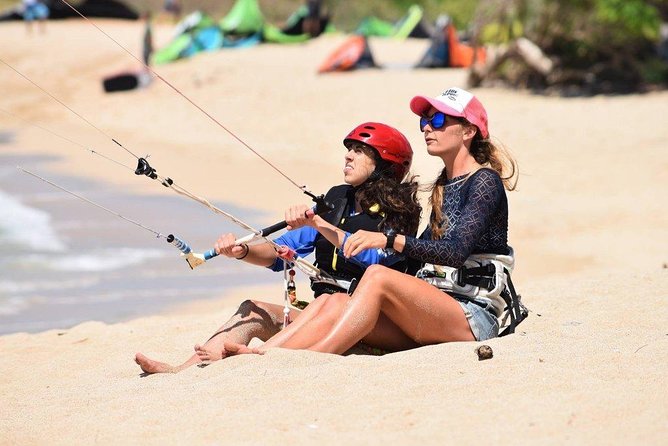
- Maximum group size of 10 keeps the coaching practical
- No previous experience required means you start with fundamentals
- Beach ground school first before you touch the water
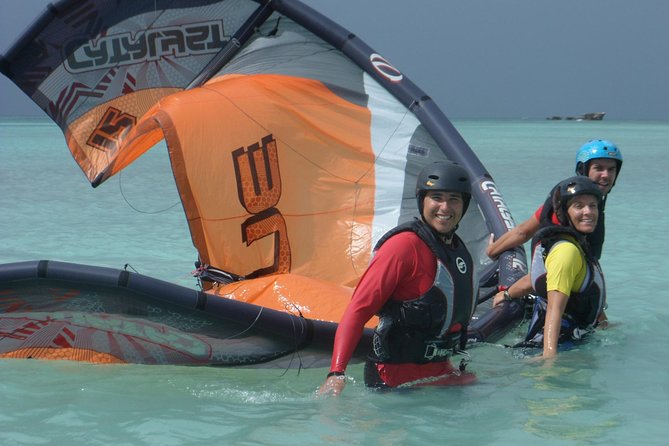
- Instructor-led exercises in the water plus guided progress
- Solo practice time so you can test what you learned
- All participants must swim and provide weights at booking for safe setup
Where Kite Beach Training Happens on Kahului Harbor
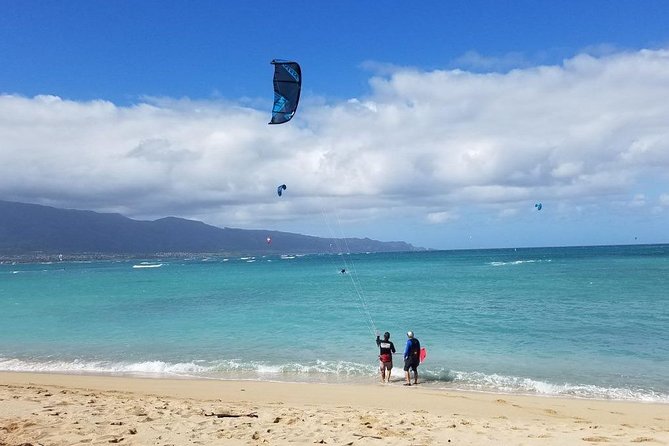
Your lesson starts at Action Sports MauiKalama Beach Park in Kihei, then you focus on training at Kite Beach in the Kahului Harbor area. The big reason this location works is simple: you get a place to learn kite handling in a coastal setting where the team can run through the steps in sequence, from orientation to beach training to water work.
Kahului Harbor is also practical because it’s not a vague “somewhere on the island” setup. You know you’re training in one defined area, and the structure of the session stays consistent. That matters when you’re learning something technical like kiteboarding, where a small mistake early can snowball fast.
One more value point: because the group is capped at 10, you are more likely to get individualized corrections when conditions change and your body gets tired.
More Maui tours, island days, and ocean experiences



Gear Selection and Kite Beach Orientation, Before You Ever Launch
The lesson begins with gear selection and a kite beach orientation. This is not filler. If you show up and jump straight into water time, you miss the core lesson, which is control and safety before speed.
Think of this phase as your setup phase. You will learn what you are using, how it fits into the process, and what to watch for as you move from standing on sand to working with wind and lines. Kiteboarding is hands-on, but it still has rules. This is where those rules get explained in plain terms.
A small practical note: the tour requires that all participants weights be advised at booking. That tells you the company is thinking about safety and appropriate setup. If you skip that step when you book, you can expect delays because it affects how the lesson is matched to you.
Beach Ground School: The Basics You Need for Real Kite Control
After orientation, the session moves into ground school on the beach. This is the part that helps you build the foundation for everything that follows. Instead of memorizing tips from clips online, you practice the sequence with an instructor present and able to correct what you are doing.
From the reviews, this is where a good instructor makes a difference. Troy was praised for giving pointers that videos often leave out. That lines up with what you should expect from a structured ground session: the coach helps you find the exact cues, timing, and body position that make the kite respond the way you want.
You should also anticipate that ground school will feel like you are learning a new routine, not just using equipment. You are training reactions, not just understanding concepts. Plan for concentration. If your attention drifts, the next phase will feel harder than it needs to be.
Water Training Exercises With an Instructor Nearby
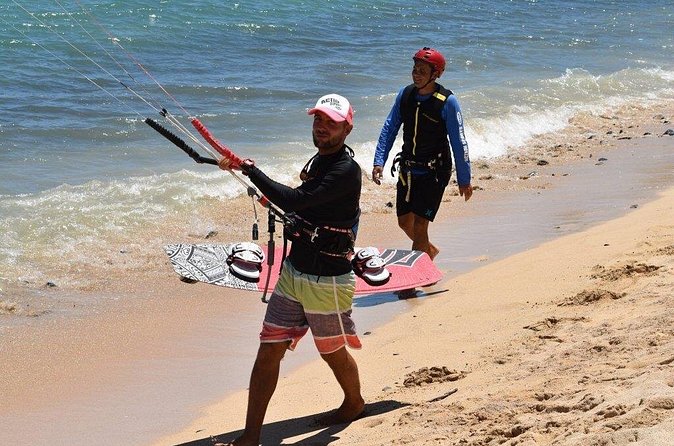
Once you move into the water, you do training exercises while accompanied by the instructor. This is where the lesson earns its keep. You get to transfer beach skills into real conditions, with supervision as you handle the kite and board in a more demanding environment.
A key theme from one review is the value of practicing the moments that look simple on screen. Dragging in the water and the launch process were both highlighted as parts where direction matters. That’s exactly what you want early on. Those steps are where beginners often struggle with timing and control, so having an instructor physically watching and giving feedback can save you from repeating the same error again and again.
Also, remember that the lesson is designed for your skill level and tailored accordingly. That means you are not starting at a random difficulty. The goal is progress, not humiliation. Still, be realistic: you are learning a sport that uses wind and tension, so you should expect it to be physically engaging.
Going Solo for Practice: Turning Coaching Into Skill
The next phase is going solo to practice what you learned. This is a major confidence-builder, because it forces you to apply the same cues without the instructor actively running every step for you.
For beginners, solo practice time is often the difference between leaving with a few tips and leaving with usable muscle memory. The instructor’s earlier work matters here. If your ground school was sloppy, solo time will feel stressful. If you paid attention to the control basics, solo practice is when it starts to click.
Because this is a shared lesson with up to 10 participants, you may wait at times while other students rotate through coaching moments. That’s normal in small-group instruction and not a sign that something is wrong. It’s also why the total duration is about 2 hours 30 minutes. You need enough time to learn, practice, reset, and repeat.






Who This Kiteboarding Lesson Suits Best (And Who Might Want a Different Plan)
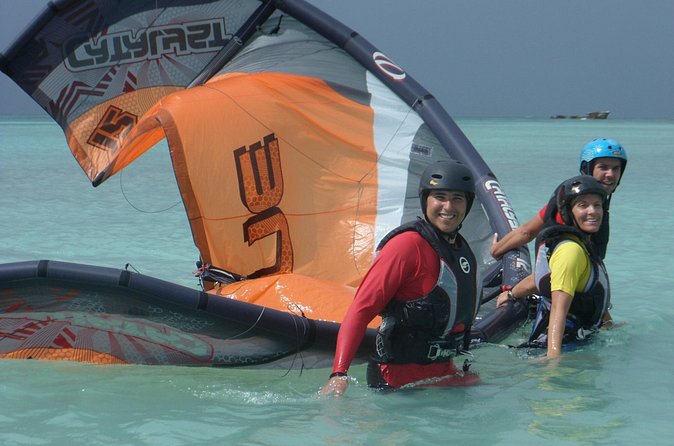
This experience is built for people with no previous experience, and the highlight explicitly says you can come in with a sense of adventure. That said, the safety requirements are not optional: you must be able to swim, you should have moderate physical fitness, and you have to provide your weight at booking.
So who will likely enjoy it most?
- First-timers who learn best with hands-on coaching and short, step-by-step practice
- People comfortable working in the water and focusing under mild stress
- Anyone who wants a structured pathway from ground control to water confidence
Who might struggle?
- If you are not confident swimming in open water or you know you get overwhelmed easily by physical effort
- If you do not like learning technical skills where you need to pay attention to timing and body positioning
Also, because lessons are tailored to your skill level, you can still show up as a true beginner and get value. Just don’t treat it like a casual activity. This is a real training session.
Price and Value: What $295 Buys on Maui
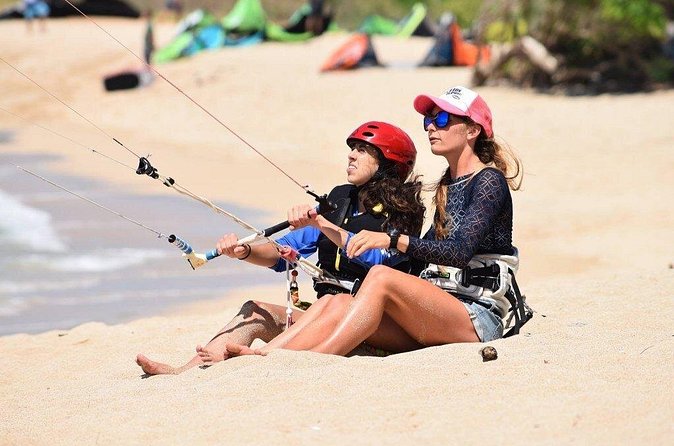
The price is $295 per person for about 2 hours 30 minutes. Is it fair? Based on what’s included, I think it is positioned as a premium instruction experience rather than a generic attraction.
Here’s what you do get:
- GST included
- Bottled water
- A professional guide
What you do not get:
- Food and drinks
- Transportation to and from attractions
The value logic is this: you are paying for a coached progression in a small group, including ground school, supervised water drills, and then solo practice time. That kind of instructor time and safety management costs money, and it’s also why group size matters. With a maximum of 10, you’re more likely to get real feedback instead of just being in the background.
One practical way to make it worth the day: plan to eat before or after, since food is not included. And if you’re staying away from Kihei, map out transportation ahead of time because the lesson includes no transport.
Weather, Timing, and the Reality of Wind Sports
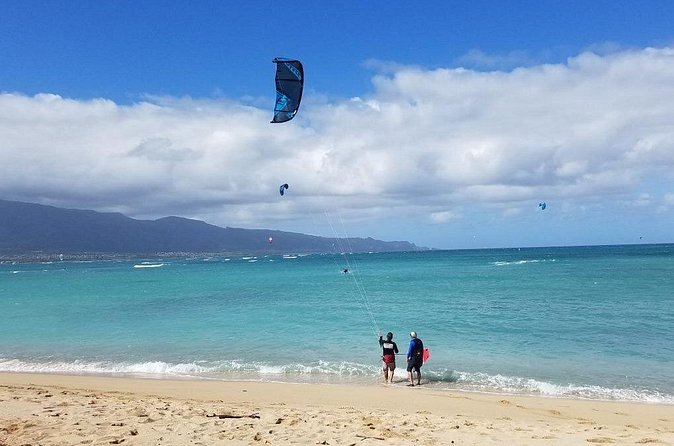
This experience requires good weather. If conditions are poor, you’ll be offered a different date or a full refund. Kite sports are weather-dependent by nature, so this isn’t a bait-and-switch. It’s a safety and scheduling reality.
It’s also telling that the experience is often booked around 22 days in advance. That suggests demand and limited windows based on wind and conditions. If you are going on a tight Maui trip, don’t treat booking like something you can do last minute.
You’ll receive confirmation at booking and you’ll use a mobile ticket. That’s convenient, especially for a day where you might be juggling sun time, water time, and the general chaos that comes with being out in the elements.
Final Thoughts: Should You Book This Kiteboarding Lesson?
I recommend booking if you want a real pathway into kiteboarding and you like structured instruction. The combination of beach ground school, guided water drills, and then solo practice time is the right progression for beginners. The reviews back this up, with Troy and Mikalea both praised for being helpful, patient, and focused on what actually works during launching and control moments.
Skip or reconsider if swimming is not comfortable for you, if you are uncomfortable with moderate physical demands, or if you want an activity that feels purely scenic. This is skill-building. When the wind and practice land, it feels like progress you can own, not just a lesson you survived.
FAQ
Where does the kiteboarding lesson start?
The lesson starts at Action Sports MauiKalama Beach Park, Kihei, HI 96753, USA, and it ends back at the same meeting point.
How long is the Maui small-group kiteboarding lesson?
The duration is approximately 2 hours 30 minutes.
How many people are in the group?
This activity has a maximum of 10 travelers.
Do I need previous kiteboarding experience?
No previous experience is required. The lesson is tailored to your skill level.
What are the participant requirements?
All participants must be able to swim, and they must advise their weight at the time of booking. The activity also lists moderate physical fitness as a requirement.
What is included in the price, and what is not?
Included: GST, bottled water, and a professional guide. Not included: food and drinks, and transportation to or from attractions.
What happens if the weather is poor?
The experience requires good weather. If it’s canceled due to poor weather, you’ll be offered a different date or a full refund.
More Workshops & Classes in Maui



More Tour Reviews in Maui



Not for you? Here's more nearby things to do in Maui we have reviewed


Maui Beach Tours, compared.
 ★ 5.0Original Sunset Cruise with Open Bar from Ka’anapali BeachFrom $1271,422 reviews
 ★ 5.0West Maui Half Day Snorkel from Ka’anapali BeachFrom $1891,253 reviews
 ★ 4.5Te Au Moana Luau at The Wailea Beach Marriott ResortFrom $2251,247 reviews
 ★ 5.0Maui Premium Sunset Dinner Cruise from Ka’anapali BeachFrom $166903 reviews
 ★ 5.0Whale Watching Cruise with Open Bar from Ka’anapali BeachFrom $115802 reviews
 ★ 4.0Road To Hana Black Sand Beach Waterfalls & Turtles TourFrom $165595 reviews
 ★ 5.0West Maui Afternoon Snorkel from Ka’anapali BeachFrom $156427 reviews
 ★ 5.0Snorkeling for Non-Swimmers with Photos Guided Tour Wailea BeachFrom $149415 reviews
Browse the lists this tour appears in