
Reviewed · MAUI SURF LESSONS
Maui: Group Surf Lesson
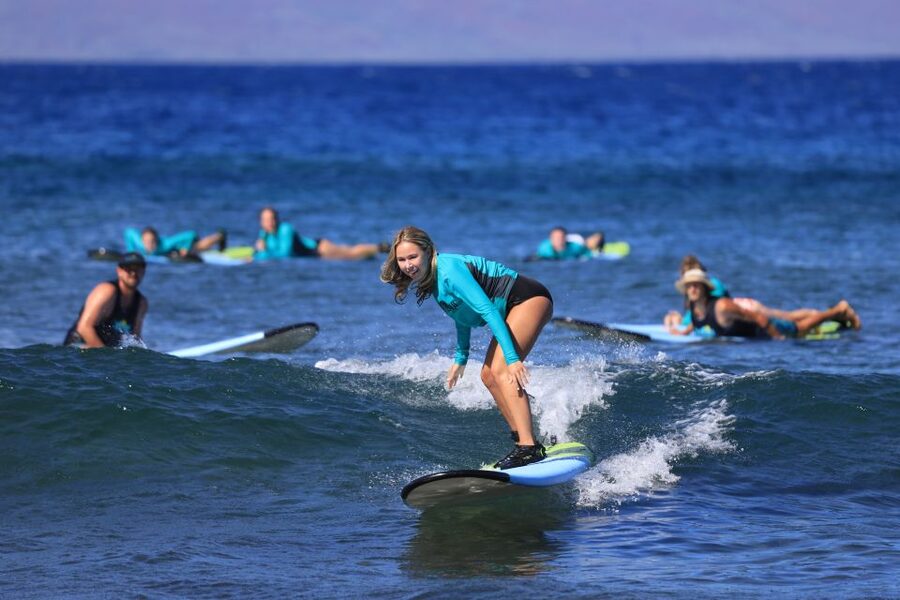
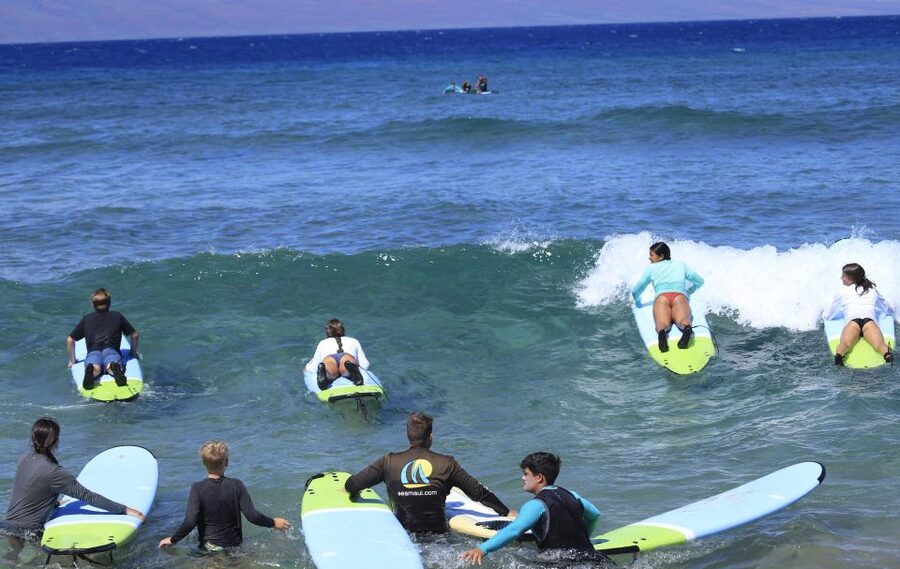
First wave nerves fade fast, if you have the right guide. This Maui group surf lesson turns the big scary Pacific into something you can actually manage, with a safety briefing, board lessons, and time in the water at Ka’anapali Beach.
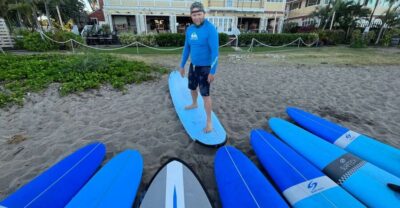
What I like most is how the coaching stays personal. You get a maximum of four students per instructor, so you are not shouting over a crowd, and the instructor can keep eyes on everyone. I also really like the gear setup, you get a rashguard, reef booties, and a surfboard with a leash, so you can show up and start learning without hunting rentals.
One consideration: this lesson is for ages 13 and older, and it expects you to feel comfortable swimming in the ocean. If that is not you, you may want to pick a different activity for your first Maui day.
Key highlights at a glance
- Ka’anapali Beach surfing, right at a classic Maui shoreline
- Small group size, limited to four participants per instructor
- Ocean safety briefing before you paddle out
- Included surf kit, rashguard, reef booties, and board with leash
- Instructor stays close, helping you adjust fast when conditions change
Ka’anapali Beach: a classic place to get your first wave right
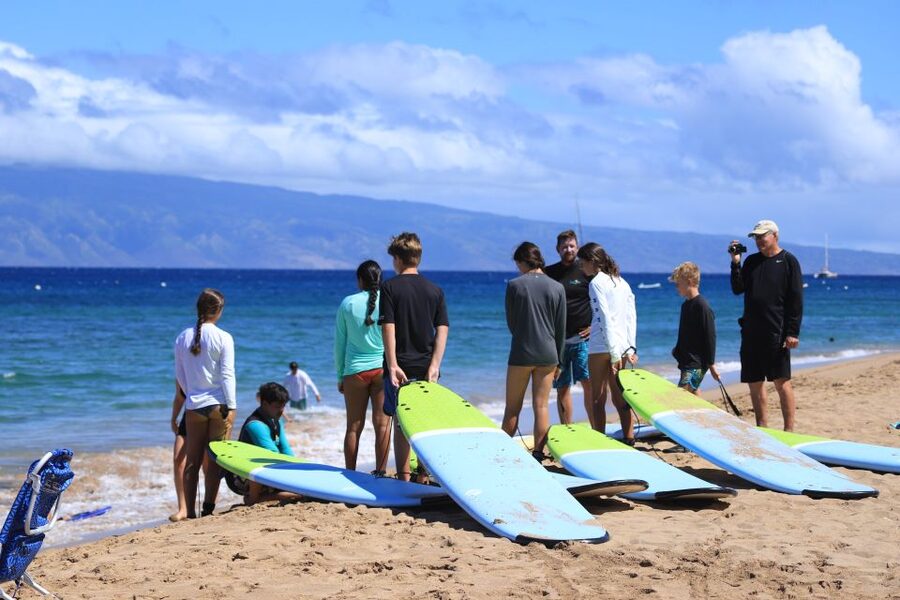
If you are going to learn surfing on Maui, you want two things: a shoreline that is easy to reach and conditions that help beginners succeed. This lesson is set up for exactly that, with surfing time at Ka’anapali Beach, one of the island’s most well-known coastlines. It means you are not guessing where to stand, how to launch, or what the beach setup looks like. The team knows the spot, and you get guided steps from sand to water.
For a first surf lesson, confidence matters. You will spend a lot of time learning the basics that sound simple on land, then feel totally different once you are floating in ocean motion. Being at a recognizable, well-used location helps because you can focus on learning, not on figuring out the logistics while everyone else is moving.
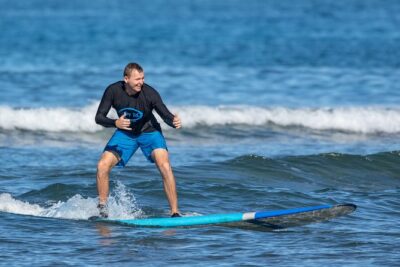
Also, the payoff is real. Once you find your balance and feel the board move under you, it stops being theory and becomes pure fun. The reviews back that up, including the idea that if waves are not too strong, many people can catch at least one ride during the lesson.
More Maui tours, island days, and ocean experiences



Price and value: what $120 buys you in real coaching time
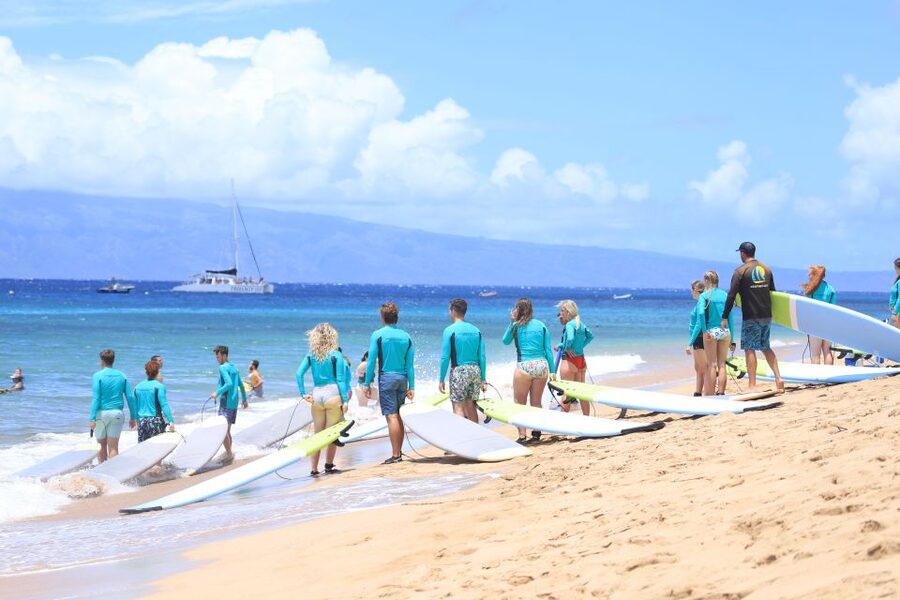
At $120 per person for a 90-minute lesson, you should think of this as paid instruction plus safety gear plus time in the water, not just a board rental. The value is mostly in the instructor attention. A maximum group size of four students per instructor is the big deal, because you will get feedback while things are still fresh, not after the wave window passes.
You are also not showing up empty-handed. The lesson includes a protective rashguard, reef booties, and a surfboard with leash. That matters because the right footwear and gear help you move around comfortably near the water, and the leash is key for safety and for keeping the board connected as you learn.
So where does the money go? You pay for:
- a structured lesson that starts with safety and instruction
- close coaching during paddling and wave attempts
- the ocean-ready gear so you can stay focused on learning
If you want a “try it once” experience, you can find cheaper options. But if you want a lesson that helps you progress in a real group setup, this pricing is pretty aligned with the goal.
Where to check in at Whalers Village, and why early parking helps
This activity runs from a beach-side meeting area at Sea Maui Surf inside the action at Whalers Village. You check in at the Sea Maui Surf booth located on the beach side of Whalers Village, between Leilani’s restaurant and the Westin. That positioning is convenient because you are already at the place where the lesson starts, with the sandy access ready.
If you are driving, plan to arrive early for parking at Whaler’s Village. The helpful detail here is the four hours of complimentary parking validation, as long as you bring your ticket from the Whalers Village parking structure when you check in. It’s one of those small things that can save you stress on a busy Maui day.
A practical tip: if you want a calmer start, give yourself enough time to park, check in, and get into swimwear. The lesson day goes faster than you think once gear is on and you are walking toward the surf.
Before you paddle out: the ocean safety briefing that makes learning easier
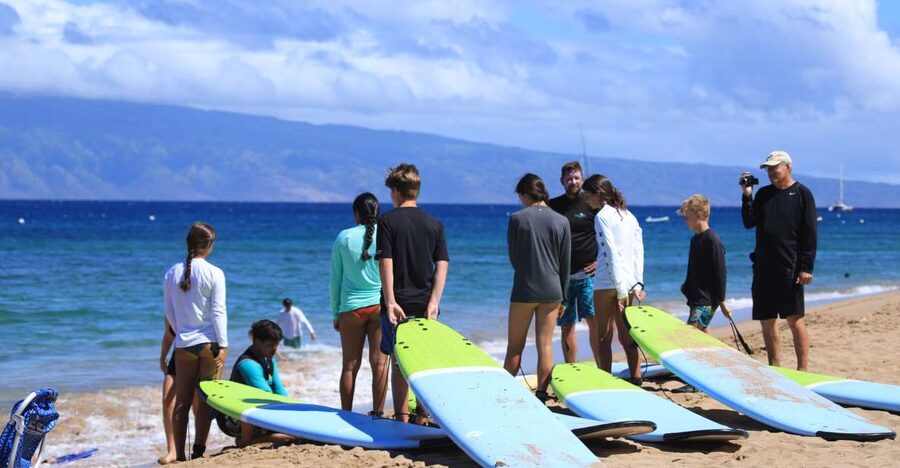
Surfing is fun, but it is also the ocean. This lesson starts the way you want it to, with meeting your instructor and heading straight to the beach for an ocean safety briefing plus surf instructions.
That first stage matters more than many people expect. Beginners often think the “real surf” starts when you grab your board. In truth, the lesson starts earlier, with how you handle your body in and around the water, how you understand wave patterns at a beginner level, and how you prepare for common moments like wiping out, resetting, and trying again.
You are also going out with your instructor always nearby. This is a big part of why the class feels manageable. When you are learning paddle technique and timing, you need quick corrections. The small group size helps with that, and the instructor staying at hand reduces the feeling of being left alone.
If you are hoping to learn without constant panic, this is where the tone is set. A good safety briefing helps you relax faster once you are actually in the water.
What your 90 minutes feel like: gear on, board in hand, then wave attempts
Here is the usual flow you can expect. You meet the instructor, receive ocean safety and surf instructions, then you grab your board and head down to the sand. From there, the lesson shifts into the physical part: paddling out with your instructor close by.
Once you are out there, you will focus on the basics that lead to catching your first ride:
- getting into position on the board
- understanding paddling timing
- learning how to approach a wave attempt without losing control too early
- adjusting when conditions shift
The lesson is designed to keep moving. For many beginners, progress happens in quick steps. You may not master everything, but you should feel a clear improvement during the session, especially with the feedback you get while everyone is still in the water together.
One detail from the experience perspective that stands out: people do not just stand around. If the surf conditions are not too intense, the structure gives you enough tries that it is realistic to catch at least one wave during the lesson. That is exactly the kind of outcome that turns a “learning day” into a “remember this” day.






Included surf kit: why rashguard, reef booties, and a leash matter for beginners
It is easy to underestimate how much gear affects confidence. This lesson includes everything you need to be ready:
- a protective rashguard
- reef booties
- a surf board with a leash
- the instructor for guidance and positioning
The rashguard is not just for sun protection. It also helps you move and grip the board area more comfortably. Reef booties matter for the sand-to-water transition. Even when you are not thinking about it, your feet and balance are part of surfing success, especially when you are walking the shoreline with a board.
Then there is the leash. For beginners, it is a major safety and learning tool. If you wipe out or lose the board for a moment, the leash helps keep the board from drifting away. That means you can reset faster, which leads to more attempts, and more attempts lead to more confidence.
If you like the idea of showing up in minimal gear and leaving with a good start, this included kit is a real win.
Small group coaching: the difference between watching and learning
A group lesson can be either chaotic or helpful. Here, the key is that you are limited to a maximum of four students per instructor. That small ratio changes everything.
With a small group:
- you get clearer instructions because the instructor can talk to you directly
- you get safer supervision because eyes can actually stay on each person
- you spend more time practicing instead of waiting your turn
It also makes the lesson more comfortable. Surfing can feel intimidating, especially if you worry about how you look or whether you are doing it right. In a small group, you are more likely to feel supported, not judged.
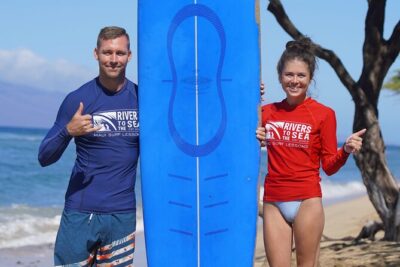
The review pattern also points to the team vibe. People highlighted instructors who were prepared, helpful, and motivating, and that supportive energy matters when the ocean is doing its own thing.
So even if you consider yourself a beginner beginner, the teaching style is set up to help you get oriented fast.
Who should book this lesson, and who should consider another option
This surf lesson is aimed at people who are ready to swim confidently. It is for ages 13 and older, and it is specifically noted for those who feel comfortable with their ocean swimming abilities.
It is also not suitable for:
- children under 13
- people with back problems
- people with mobility impairments
Even if you are within the age range, think honestly about your comfort in open water. Surfing lessons involve paddling, balance, and getting back into position after falling off. If that sounds like a stretch right now, you might be better off doing a different kind of Maui water activity first.
On the upside, if you meet the comfort requirements, this is a great fit for:
- couples or small groups wanting shared fun
- friends traveling together who want a hands-on activity
- families where everyone is old enough to join and comfortable swimming
What to bring and wear so you do not waste time on day one
This is one of those tours where showing up prepared makes the whole experience smoother. Plan to come in the right clothes because you are told to come wearing your swimwear.
Bring:
- a towel
- biodegradable sunscreen
- any personal items you need for comfort
For sunscreen, the biodegradable detail is important. It’s a small change you can make that matches the ocean setting, and it’s the kind of instruction that signals the team is thinking about responsible use of the shoreline.
If you want less hassle, keep your “day-of” essentials simple. Once the lesson starts, most of your attention should be on your board position, your paddling, and the instructor cues, not on digging out forgotten items.
Also, because the lesson is in the ocean, consider how you manage hair, jewelry, and anything that feels like it might shift or tangle. The lesson moves quickly, and you want to be ready to step into water time without fiddling.
Weather can change the session, so keep your schedule flexible
Surfing on Maui is weather-dependent, and this experience is explicit about that. Lessons can be rescheduled or cancelled due to weather conditions, with safety as the top priority. If they cancel and you cannot be accommodated with a new time, you get a full refund.
The practical takeaway is simple: if you schedule this close to a flight day or a tightly packed itinerary, you increase your stress. If you can give it some breathing room, you will feel better when the ocean calls the shots.
Should you book this Maui group surf lesson at Ka’anapali?
If your goal is to learn surfing with real support, I think this is a smart booking. The biggest reasons are small group size and gear included, plus a lesson flow built around safety and quick feedback. At $120 for 90 minutes, you are paying for instruction that keeps you actively trying, not just observing.
You should book if:
- you are 13 or older and comfortable swimming in the ocean
- you want a structured lesson with an instructor nearby
- you like the idea of included rashguard, booties, and leash
You may want to skip or choose another option if:
- you have back problems or mobility limitations
- you are not comfortable with ocean swimming yet
- you hate the idea of schedule changes due to surf conditions
If you are ready to give it a real go, this is the kind of Maui experience that leaves you smiling, even if your first ride is more wobbly than graceful. Learning surf on a famous beach, with a team that keeps you safe and moving, is exactly how you turn a vacation day into a story you will tell for years.
FAQ
How long is the Maui group surf lesson?
The lesson lasts 90 minutes.
What is included with the surf lesson?
Included are the surf lesson, an instructor, a protective rashguard, reef booties, and a surfboard with a leash.
Where do I check in for the lesson?
Check in at the Sea Maui Surf booth on the beach side of Whalers Village, between Leilani’s restaurant and the Westin.
How much does it cost?
The price is $120 per person.
What should I bring to the beach?
Bring swimwear, a towel, and biodegradable sunscreen.
What is the minimum age to join?
The lessons are for those 13 years or older.
Is the instructor English-speaking?
Yes, the instructor speaks English.
Is this suitable for people with mobility impairments or back problems?
No, it is not suitable for people with back problems or people with mobility impairments.
What is the cancellation option?
You can cancel up to 24 hours in advance for a full refund.
More Workshops & Classes in Maui


More Tour Reviews in Maui



Not for you? Here's more nearby things to do in Maui we have reviewed


Maui Surf Lessons, compared.
 ★ 5.0Two Hour Beginner Group Surf Lesson in KiheiFrom $98950 reviews
 ★ 4.5Outrageous Surf ScHool Lesson on Lahaina SideFrom $75547 reviews
 ★ 5.0Group Surf Lesson at Kalama Beach in KiheiFrom $108264 reviews
 ★ 4.9Maui Lahaina Group Surf LessonFrom $125235 reviews
 ★ 5.0Private Surf Lesson for Two Near LahainaFrom $145189 reviews
 ★ 5.02 Hour Beginner Group Surf Lessons154 reviews
 ★ 5.0Group Surf Lessons from Kaanapali BeachFrom $120143 reviews
 ★ 5.02 Hour Private Group Surf Lesson in Lahaina MauiFrom $125129 reviews
Browse the lists this tour appears in