
Reviewed · MAUI WHALE WATCHING TOURS
Lahaina: Day or Sunset Whale Watching Tour with Naturalist
If whales are your thing, this one hits different. This Lahaina tour puts you on a small, custom-made inflatable raft in the Maui Nui whale sanctuary, with onboard naturalist-guided explanations and even whale songs through a hydrophone.
What I like most is the up-close feel you get when you are not packed onto a big boat. I also love that the crew names matter, because the guides tend to be passionate educators, like Rene and Joe, Brian and Captain Joe, and Marina and Renee, who make the science easy to follow while you watch the whales do whale things.
One thing to consider: this is a small raft, and conditions on the Auau Channel can get windy. If you are prone to motion sickness, bring what you need, and note it is not a fit for everyone (no wheelchair access, and it is not suitable for people with certain medical conditions).
Key things to know before you go
- Small-raft feel with close viewing, often with a tight group size around the low teens to about 20.
- Hydrophone whale songs, amplified through onboard speakers so you can hear sounds you would otherwise miss.
- Naturalist-style narration, where crew like Rene, Joe, Brian, and Marina explain migration, behavior, and what you are seeing.
- Captain-driven positioning, with multiple chances to be at the right spot when whales are active.
- Guaranteed sightings or a free return trip, so you are not just gambling your time.
From Lahaina to the Maui Nui sanctuary
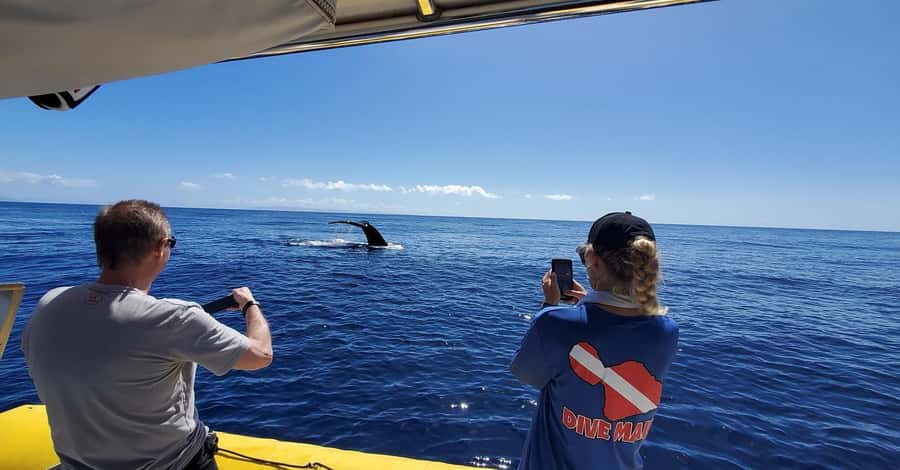
You start in Lahaina at 1223 Front St, meeting at Dive Maui. After a short walk for check-in and boarding, you head out into the Auau Channel for the main whale watching stretch.
The trip is timed around one of Hawaii’s most predictable wildlife events: in winter, humpback whales migrate to Maui waters to mate and give birth. That matters because you are not just looking for random whales passing by. You are in the part of the season where you are more likely to see mothers, calves, and pairs working on their routines.
Even if you do not care about the biology, the migration story helps you read what you are seeing. A fast tail slap looks cooler when you understand it is part communication and part behavior. A slow swim feels more meaningful when you know what season it is and why the sanctuary waters draw them in.
You can also read our reviews of more tours and experiences in Maui.


The custom-made inflatable raft: close viewing without the big-boat chaos
This is a raft-style experience, not a massive ferry. The payoff is simple: you spend more time feeling near the action, instead of watching whales from a distance.
The raft is custom-made and inflatable, which helps with stability in choppy moments compared to rigid boats, but it still rides the water. Several people note it can feel a little rocky when wind is up, and if that is you, take motion sickness seriously. One review specifically recommends Dramamine, and I agree with the logic: better to prevent it than to white-knuckle your way through two hours on the water.
Also check your personal packing choices. Glass objects are not allowed, which is common for ocean tours, but it is still one more reason to keep your day simple. If you want photos, bring a case or protective pouch, and keep anything breakable sealed.
Group size is another reason this tour often feels intimate. One review mentioned a max of about 20 people, with a group that felt even smaller in practice. That matters because it changes how whales and people share the same space. If you are hoping for that up-close, lean-forward kind of viewing, this setup tends to deliver.
Auau Channel whale watching: how the two hours usually plays out
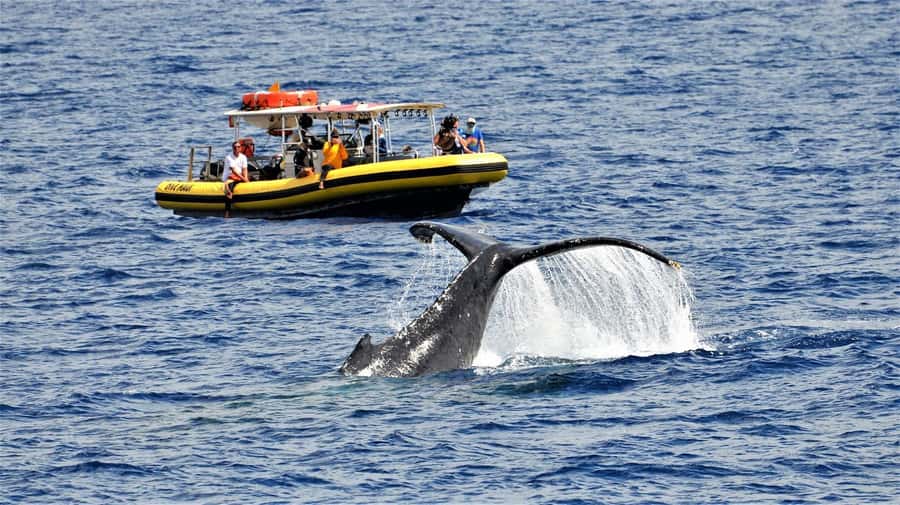
Your whale watching time is built around a focused window, about two hours on the water in the Auau Channel. The schedule is straightforward: get set up, head out, then settle into watching and listening.
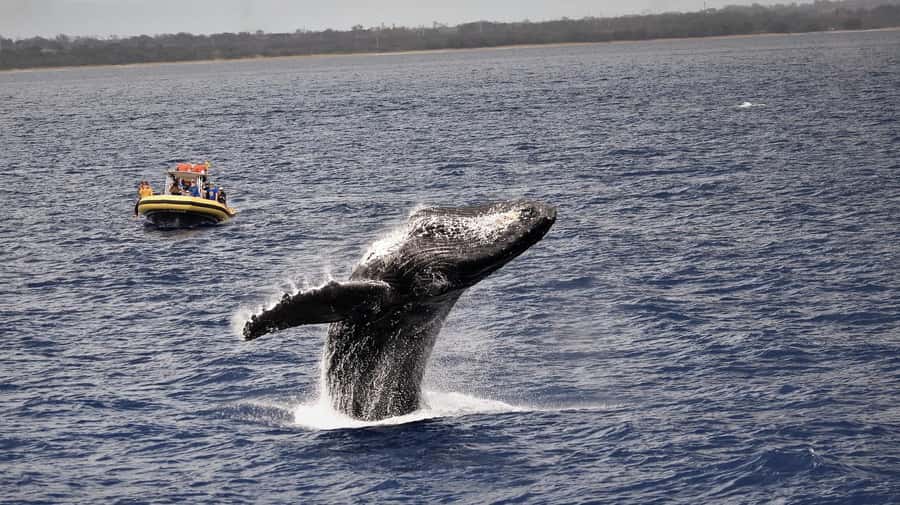
The best part is also the most honest part: whale activity is never fully predictable. Sometimes you get frequent bursts of surface behavior, like breaches and tail slaps. Other times whales spend more time cruising or dipping just below the surface, and you watch with patience.
When whales are active, the crew typically finds them quickly and positions the raft so you have a good view. Multiple reviews highlight that the captain guided the group straight to whales and kept changing position as the action shifted. One person even described a whale swimming under their boat multiple times, which gives you an idea of the closeness you can hope for.
If whale action slows down on your exact outing, do not assume the tour is failing. The ocean decides the pace. The key is that you are in the right zone at the right time, with a team that looks for whales and adjusts in real time.
Whale songs through a hydrophone: more than just visuals
The hydrophone and speakers are one of the most memorable features because they turn the tour from sight-only into sound + science.
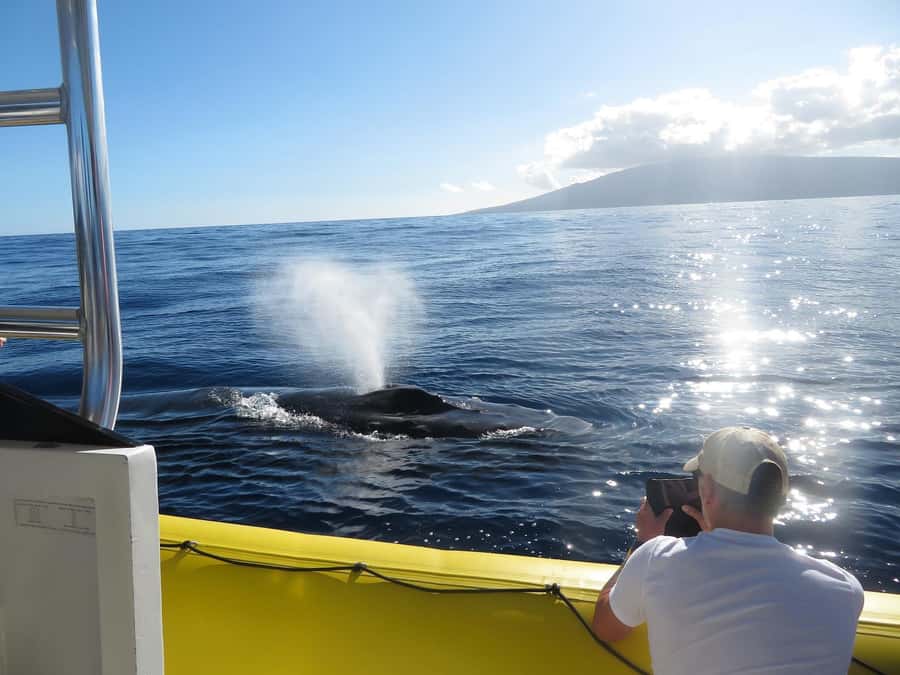
Humpback whales communicate with songs, and the tour amplifies those sounds so you can hear them during the trip. That changes how you experience the whales. Instead of only watching for spouts and movement, you can also track the presence of whales through sound, which is especially helpful when they are not constantly at the surface.
If you are the kind of person who wants context, this is where the naturalist narration shines. As the captain positions the raft and the whales vocalize, the onboard education helps you understand what you are hearing. It is not just cool noise. It is part of how humpbacks interact in the breeding season.
The naturalist-led experience: guides like Rene, Joe, Brian, and Marina
The naturalist portion is a big reason this tour scores high. The most praised theme across feedback is that the guides are not just reading facts. They explain what to look for, why whales behave a certain way, and how the season affects sightings.
Names that show up again and again include Rene and Joe, plus crews like Brian and Captain Joe, Captain Mark and Renee, and Marina and Renee. People also mention educators such as Brooke and CJ, and a guide named Stephen. Even if the exact team on your day is different, the pattern is the same: the crew talks like they care, because they do.
Expect the narration to be practical and direct. You learn what makes a humpback a humpback, what migration means in plain language, and how mothers and calves may show up in the same area. You also get help spotting behavior cues, like when whales are about to surface or when their movement suggests they are lingering close by.
This is also a family-friendly kind of learning. If you have kids who lose interest fast, the tour still tends to hold attention because the story is tied to what is happening outside the raft.





What the meeting point and timing feel like in real life
You meet at 1223 Front St at Dive Maui. Parking is along Front St or at the Lahaina Cannery Mall, which is a relief because Lahaina is not exactly known for free and easy parking.
Plan to arrive early and check in on time. One key line to remember: the tours leave on time. That sounds basic, but it matters a lot on water tours where you cannot stretch the schedule without affecting everyone.
The walking segments on either side are short, about five minutes each way, and the main time commitment is the water portion. If you are trying to fit this into a busy Lahaina day, the overall format makes it easier than half-day excursions that feel like you are waiting around for hours.
Who this tour suits best, and who should skip it
This is a good fit if you want an up-close whale experience with learning built in. It is also a nice choice for couples and small groups who want a calmer vibe than the typical big-boat scene.
It is described as perfect for the whole family, but there are clear limits:
- Not suitable for children under 2
- Not recommended for pregnant women
- Not suitable for people with back problems or heart problems
- Not suitable for wheelchair users
Service animals are allowed, which is helpful for some visitors.
If you fall into the not-suitable categories, you will be doing yourself a favor by looking for a different type of excursion. Ocean tours are exciting, but they are also physically demanding in ways that do not show up on the brochure.
If you are deciding between two whale watches and one is more flexible in accessibility and medical fit, prioritize your comfort and safety first. A whale sighting is special, but it should not come at the cost of your health.
Price and value: why $80 can feel fair here
At $80 per person for about 90 minutes to 2 hours, you are paying for a focused, guided whale encounter with a small raft setup plus a naturalist and hydrophone audio.
Is it expensive? Sure, it is not cheap. But the value case is strong for three reasons.
First, this is not a generic narration with far-off viewing. The format is built for closeness, and that is exactly what you are paying for. Second, the hydrophone experience adds something many whale tours do not include, so you get both hearing and watching. Third, you get a confidence boost from the guaranteed sightings or free trip for another day promise. That reduces the risk of spending your money on a slow whale day.
Also, consider what you are actually buying on Maui in winter. You are buying access to a whale sanctuary context during the migration season. You cannot manufacture whale behavior, but you can increase your odds, and this tour is designed around that reality.
Practical tips to make windy Auau Channel days easier
This is the part that keeps your day from getting annoying.
- Bring motion sickness prevention if you tend to get queasy on boats. Reviews specifically recommend Dramamine, and it makes sense for a smaller raft with ocean movement.
- Wear layers. Even on warm Hawaii days, ocean wind can cool you down quickly.
- Keep your hands free. You will want both hands for stable footing and smooth photo setups.
- Skip anything breakable. Glass objects are not allowed, so plan for a safe way to bring water and snacks in approved forms.
- Arrive early, because the tour leaves on time.
One more practical detail: if you are sensitive to wind and spray, sit and position yourself where you feel most comfortable. The captain and crew can help with general guidance, and they do reposition the raft based on where whales are active.
Should you book this Lahaina whale watch?
I think you should book this tour if you want:
- An up-close humpback experience from a small raft
- A naturalist-led explanation tied directly to what you see
- A tour with hydrophone whale songs, not just visual spotting
- A team that tends to move fast to find the action, guided by a captain who knows how to position the raft
I would hesitate if:
- You are in a medical group listed as not suitable (pregnancy, back or heart issues, or you use a wheelchair)
- You know you get severely sea sick and you have not handled that successfully before
- Your schedule is tight and you cannot afford the possibility of a poor-weather reschedule
If you are flexible, this kind of tour is one of the most straightforward ways to experience Maui’s winter whale season from Lahaina, with the kind of small-boat viewing that makes the whole day feel personal.
FAQ
Where is the meeting point for the Lahaina whale watching tour?
Meet at Dive Maui at 1223 Front St. Parking is available along Front St or at the Lahaina Cannery Mall.
How long is the tour?
The duration is about 90 minutes to 2 hours, with whale watching taking place in the Auau Channel.
What is included in the ticket price?
The experience includes whale watching with a naturalist and narration during the trip.
Is hotel pickup and drop-off included?
No. Hotel pickup and drop-off are not included.
What is not allowed on the tour?
Glass objects are not allowed.
Who should not take this tour?
It is not suitable for children under 2 years old, pregnant women, people with back problems, people with heart problems, and wheelchair users.
What happens if weather is poor?
This experience requires good weather. If it is canceled due to poor weather, you will be offered a different date or a full refund.
More Tours in Maui


More Tour Reviews in Maui
Not for you? Here's more nearby things to do in Maui we have reviewed


Maui Whale Watching Tours, compared.
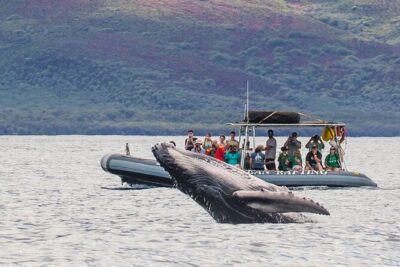 ★ 5.0Maui Eco-Raft Tour: Eye-Level Whale or Dolphin Watching – LahainaFrom $852,482 reviews
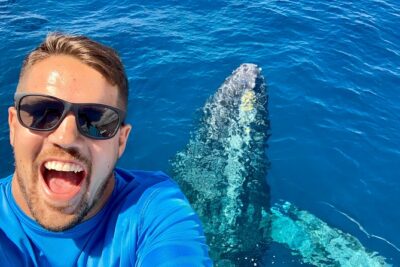 ★ 4.5From Maalaea: Whale Watching Tour Aboard the QuicksilverFrom $491,461 reviews
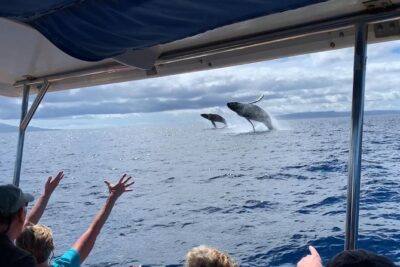 ★ 5.0Ultimate Whale Watch from LahainaFrom $771,162 reviews
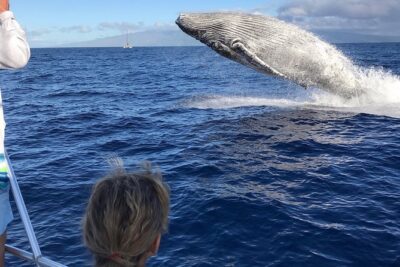 ★ 5.0WHALES GUARANTEED Maui Whale Watching Makai AdventuresFrom $971,081 reviews
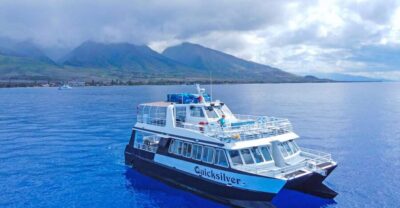 ★ 4.6Ma’alaea Harbor: Whale Watching Tour Aboard Power CatamaranFrom $49979 reviews
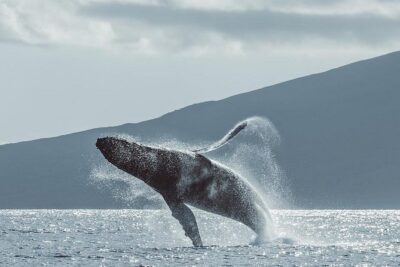 ★ 5.0Whale Watching Cruise with Open Bar from Ka’anapali BeachFrom $115802 reviews
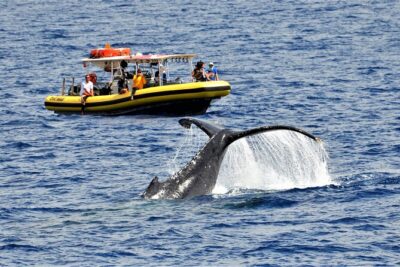 ★ 5.0Whale Watching Maui: 2-Hour Small Group Raft Tour from LahainaFrom $80661 reviews
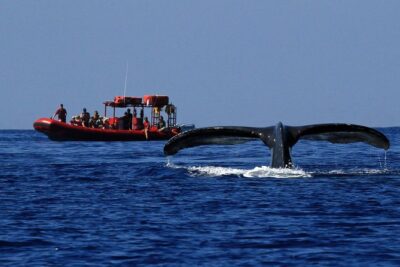 ★ 5.0Maui Whale-Watching Tour by Raft from KiheiFrom $84646 reviews
Browse the lists this tour appears in