Self-Guided Audio Driving Tour in Road To Hana

Reviewed · ROAD TO HANA TOURS

Self-Guided Audio Driving Tour in Road To Hana

4.5 · 87 reviews 8 to 16 hours (approx.) From $19 Operated by GuideAlong (GyPSy Guide) · Bookable on Viator
Book on Viator →

GPS audio makes the Road to Hana easier. This self-guided drive pairs GPS-triggered narration with step-by-step directions to many of the route’s best stops, so you can explore at your own speed without committing to a bus schedule.

I love the location-based stories and tips that play when your phone detects you are near key sights, not just generic commentary. I also love that the GuideAlong tour is built for offline use, so you can keep going even when cell service disappears in the rainforest stretches.

The main catch to plan for is that some big attractions need advance tickets or reservations, and those costs are not included. Wai’anapanapa State Park is one of the biggest examples, and the Pipiwai Trail hike sits inside Haleakala National Park with pass requirements.

Key Takeaways for Your Road to Hana Day

Self-Guided Audio Driving Tour in Road To Hana - Key Takeaways for Your Road to Hana Day

  • GPS autoplay that cues you before each stop, so you are less likely to miss turns in low-signal areas
  • Offline audio after you download once, which makes the day smoother when reception drops
  • Flexible stops with suggested half-day, full-day, or multi-day planning so you can match your energy level
  • Great bang-for-buck pricing at $19.99 per group (up to 8 people) for one vehicle
  • Expect the day to be long on a curvy, single-lane-bridge road, so start early and stay sharp

GPS-Guided Road to Hana, Without the Bus

Self-Guided Audio Driving Tour in Road To Hana - GPS-Guided Road to Hana, Without the Bus
The Road to Hana is famous for a reason. Dense greenery, waterfall stops, and ocean views keep stacking up turn after turn. The trick is not the driving, it is keeping track of where you are supposed to stop, what to look for, and how to fit it all into one long day.

This audio tour tackles that with an app that uses your phone’s GPS chip. As you drive, the narration starts automatically based on where you are, so the guide feels tied to the road instead of stitched to a playlist. You do not have to follow one rigid sequence either. The tour can be paused, resumed, and you can skip stops as your interests and parking reality change.

It also leans hard into practical travel value: what the sight is, what you might want to notice, and how long to budget. That matters on Hana, where time turns into the limiting factor faster than money.

You can also read our reviews of more guided tours in Maui

Price and Day Planning, From 8 to 16 Hours

At $19.99 per group (up to 8 people), this is one of the easier ways to experience Hana on a budget. The value jumps if you travel with friends or family because the purchase covers one vehicle rather than charging per person for audio.

In time terms, plan for 8 to 16 hours. If you hit the major stops plus a proper hike, the longer end is realistic. If you choose fewer stops, focus on beaches and short walks, and cut the hike time, you can keep it closer to a half-to-full day.

One piece of advice I would treat as non-negotiable: leave early. The Road to Hana is long, and driving parts of it in the dark is not a fun trade. I would aim for an early start so you can enjoy stops without feeling rushed back to the car.

How the App Works Offline and Why GPS Sync Matters

Self-Guided Audio Driving Tour in Road To Hana - How the App Works Offline and Why GPS Sync Matters
Setup is simple, but it pays to do it before you reach Hana. After booking, you get instructions by email and text that tell you how to download and redeem your voucher code. You then download the GuideAlong app and select the tour under My Tours.

Once downloaded, you can tour offline. That is huge on Maui’s winding road because cell service can be spotty for long stretches. In my view, this is the real advantage over any audio plan that depends on streaming data. You are not stuck waiting for service or reloading.

A second practical benefit is pacing. The narration comes in timed chunks, so you can grab your own moment to listen. When the voice is not talking, you can use your phone’s audio for your own music. It is a small thing, but it makes the drive feel less like a lecture and more like having a friendly person in the passenger seat.

For best results, keep your phone charged. Bring a USB car charger, and start with a fully charged device. On a long day, battery anxiety can ruin the calm.

Your Route at a Glance: Ke’anae, Lava Tubes, and Beaches

Self-Guided Audio Driving Tour in Road To Hana - Your Route at a Glance: Ke’anae, Lava Tubes, and Beaches
Think of the tour as a set of anchor stops plus flexible gaps. You can use it as a full route plan, or treat it like a menu where you choose what fits your mood.

Hana Highway, Road to Hana

The experience begins as you drive Hana Highway. The audio guide plays based on your GPS location, so the narration helps you create a route that matches your interests and schedule. If you want structure, the app also includes trip planners for suggestions like half-day, full-day, or multi-day itineraries.

Ke’anae Arboretum, plants and old terraces

This is a great no-stress opener. You can typically see a lot in under 30 minutes. It is free, and it gives you a strong sense of what Hana is about: tropical plants, agriculture, and volcanic landscape.

The highlights are the unusual variety of trees and the rainbow-toned bark on the Rainbow Eucalyptus. You also get a view of taro cultivation terraces created by ancient Hawaiians, plus areas along Piinaau Stream for an easy walk and photos.

If your group loves short, meaningful stops, Ke’anae Arboretum is a smart place to build momentum early.

Hana Lava Tube, explore if you like the dark

Next is the Hana Lava Tube. It is one of the most accessible lava tube options on the route. You can enter and explore, or turn back if caves make you feel too closed in.

This stop is fun because it changes the vibe. You move from bright rainforest views into a darker, geologic world. It is also a nice contrast to waterfalls and beach time.

Ho‘okipa, wind, world-class boards, and turtles

Ho‘okipa is one of those places where the ocean is doing its own thing. It is not recommended for swimming due to constant winds and currents, but it is spectacular for watching windsurfers.

Look for turtles too. The tour notes that they can snooze on shore, and they can sleep in the water as well. Keep distance. Do not touch.

If you are traveling with mixed energy levels, this is an easy win: stand, watch, take photos, and keep your feet dry.

Ke‘anae Point, ocean waves and a coral-lava rock church

Ke‘anae Point sits on a flat peninsula fed by volcanic lava activity associated with Haleakala. It is tied to taro farming history and gives big ocean energy in a small area.

There is also a small church made from coral and lava rock, built more than a century and a half ago. Even if you do not plan to go inside, it is a memorable detail.

The waves can be impressive here, and you may spot coconuts along the shore.

Koki Beach and Hamoa Beach, two different ways to cool off

Koki Beach is a quick viewpoint stop, close to the same turnoff that leads to Hamoa Beach. The appeal is partly the scenery and partly the mythology. The tour points out Alau Island, an outgrowth shaped by volcanic activity, plus Pele and Maui legend tied to the area.

Hamoa Beach is the classic little crescent for stretching your legs and relaxing. It has public bathrooms and showers, but no lifeguards. When conditions are calm, it can be family-friendly, but you should watch kids closely.

I like these beach breaks because they give your day a reset. You are still on the Road to Hana, but you are not only rushing between hikes and overlooks.

Waterfalls and Ocean Outlooks You Can Time Your Stops Around

Self-Guided Audio Driving Tour in Road To Hana - Waterfalls and Ocean Outlooks You Can Time Your Stops Around
Road to Hana has a way of making waterfall stops feel mandatory, even when your legs want a rest. The good news is that many of these stops are flexible in how far you go.

Twin Falls, the first big hike-style stop

Twin Falls is often the first moment where you really get out of the car and walk. The trail is about 1.5 miles, and it can get muddy, so proper footwear matters.

The bamboo forest vibe is a big part of the appeal. You can also choose how far you continue, depending on time and energy. Many people pair this with a farmstand visit for something like a tropical fruit smoothie, which can feel like a reward after the driving stretch.

Upper Waikani Falls, the 3 Bears effect

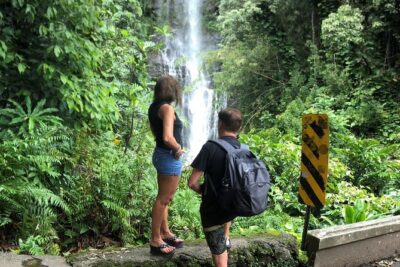
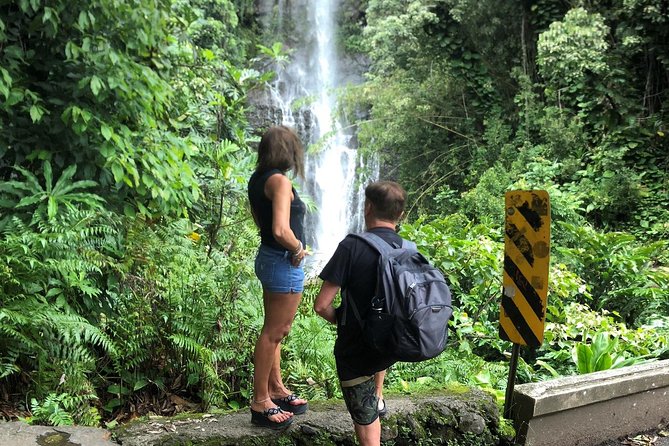
Upper Waikani Falls is also known as 3 Bears Falls. The tour’s interpretation is simple and fun: after heavy rain, water flows as one thick cascade. With less water, it breaks into three separate falls, like one large, one medium, and one small bear.

This is worth timing because the look can change based on recent weather. Bring your patience, and let the guide narration set the expectation so you know what you are looking at when you arrive.

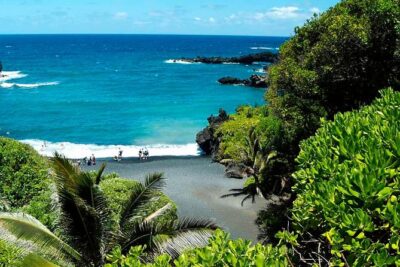
Wai‘anapanapa State Park, black sand plus sea arch and blowhole

Wai‘anapanapa is the big-name stop for many people, and it comes with planning requirements. The audio tour highlights that reservations are required for entry, and admission is not included.

Once inside, follow the signs to explore the volcanic coastline. You can look for the sea arch offshore and the blowhole. The park is also steeped in Hawaiian legend, so the narration adds meaning beyond the photo.

Give yourself time here. Two hours is a realistic planning number if you want to stroll the coastline and not just sprint for black sand.

Black Sand and the Pipiwai Trail Hike Plan

Self-Guided Audio Driving Tour in Road To Hana - Black Sand and the Pipiwai Trail Hike Plan
If Wai‘anapanapa is the headline view, the Pipiwai Trail is the hike that earns the day.

Pipiwai Trail at O‘heo Gulch, bamboo forest to Makihiku and Waimoku

Pipiwai Trail is located in the Kipahulu area at the end of the Road to Hana drive and inside Haleakala National Park. That means you need to show an NPS pass for entry, or purchase one on arrival, and timed entry rules may apply depending on current requirements.

The full hike is a 4-mile loop with about 650 feet of elevation gain. The tour describes it as moderate, but hot conditions can make it feel tougher. The trail includes bamboo forest sections that feel calm and cool.

You will get views of Makihiku Falls along the way. Most people continue toward Waimoku Falls, described as the highlight and furthest point.

Time it with your day in mind. Expect 2+ hours depending on your pace. A practical rule is: arrive by around 2 pm and you usually have enough time to hike, then drive back without racing.

One booking note that changes the day

Because Wai‘anapanapa needs reservations and Pipiwai needs an NPS pass, this audio tour works best if you line up those essentials early. The tour itself does not provide those tickets.

If you forget, you can lose the stop entirely. So I treat reservations and passes as part of the tour, even when the audio cost is low.

Practical Tips for Driving This Road Safely

Self-Guided Audio Driving Tour in Road To Hana - Practical Tips for Driving This Road Safely
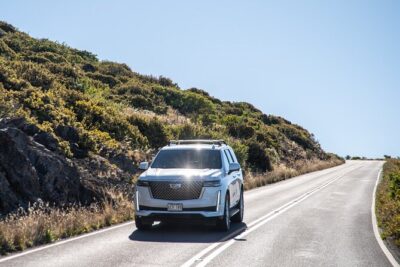
The Road to Hana is not like cruising a highway. It is curvy, slow in stretches, and full of one-lane bridges. The narration helps with timing and what to expect around upcoming areas, including traffic notes.

Here are the habits that make the day go better:

  • Start early so you are not driving fatigued in the dark.
  • Keep your phone charged, use a car charger, and download the tour beforehand.
  • Park and step out safely. Muddy trails and ocean edges mean you should watch your footing.
  • Pull over for locals on narrow road sections when you can, and do not block pullouts.

Also, treat the audio as a guide, not a replacement for road signs. If you ever feel uncertain at a beach turnaround or turnoff, slow down and confirm using visual navigation. The tour is designed for GPS autoplay, but the road itself still needs respect.

Is It Worth $19.99 Per Group?

Self-Guided Audio Driving Tour in Road To Hana - Is It Worth $19.99 Per Group?
For a self-guided Road to Hana day, yes, it is strong value. You get GPS-based autoplay, a large set of points, and flexible routing, all without paying for a bus or a high-priced guided group day. At this price, it is easy to justify even if you only do a subset of the stops.

The best fit is you if:

  • you want control over pacing, stopping longer at what you love and skipping what you do not
  • you are trying to keep Maui costs in check
  • you have limited patience for strict tour schedules

I would reconsider if:

  • you hate any setup effort at all. You will need to download the app, redeem your voucher code, and prep your phone battery.
  • you are relying on last-minute entry at places that require reservations or park passes. Those extras are not included, so you must plan ahead.

FAQ

FAQ

Do I need cell service during the Road to Hana drive?

No. Once the tour is downloaded in the GuideAlong app, you can use it offline. The audio tour is designed to keep working even when you have little or no service.

How do I get the audio tour onto my phone?

After booking, you receive email and text instructions to download the audio tour. You redeem your voucher code using the GuideAlong app, then download the tour under My Tours.

Can I start and end the tour anywhere along the route?

Yes. The commentary plays automatically based on your location, so you can flex when and where you start and end along the Road to Hana route.

Is the admission for stops included in the price?

No. Admission tickets are not included, and some stops are listed as not included while others are free.

Do I need a reservation for Wai‘anapanapa State Park?

Yes. The tour notes that reservations are required for entry at Wai‘anapanapa State Park.

Do I need an NPS pass for Pipiwai Trail?

Yes. Pipiwai Trail is inside Haleakala National Park, and you will need to show your NPS pass for entry or purchase one on arrival.

How long does the tour take?

It ranges from about 8 to 16 hours, depending on which stops you choose and how much time you spend at each.

What is included in the tour price?

The included items are the GuideAlong (GyPSy Guide) audio tour with location-based stories, flexible route planning, trip planners (in-app, web, and PDF), offline playback, and ongoing updates. Phone, chat, and email support are also included.

If you want, tell me your travel dates and whether you plan to do Pipiwai. I can help you choose a realistic stop mix for an 8-hour, 10-hour, or 13-hour Road to Hana day.